Many students wonder if they should submit ISEF continuation projects or start fresh. The decision hinges on whether you can demonstrate significant new scientific inquiry rather than just repeating old results.
The Core Question: Is It New Science?
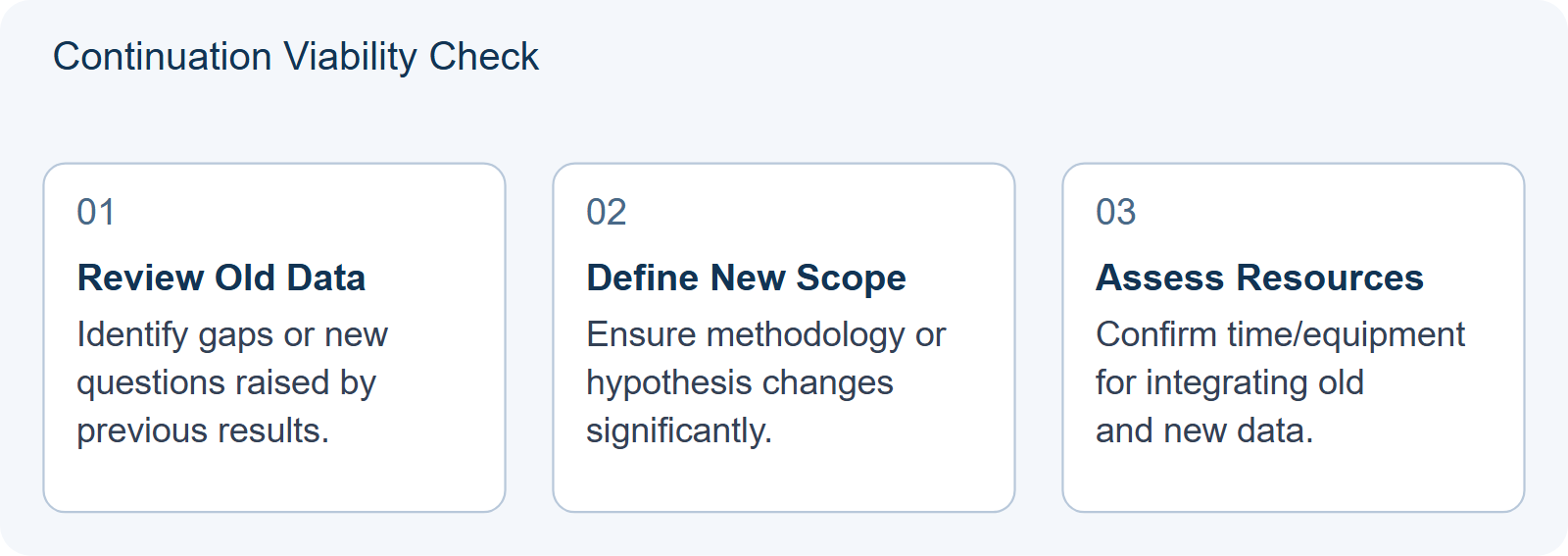
A continuation project is not simply “Part 2” of last year’s experiment. Judges look for a fundamental shift in scope, methodology, or hypothesis. If you are merely collecting more data points using the exact same setup without changing the experimental variables or analysis depth, it may be viewed as insufficient progress.
To justify a continuation, ask yourself:
- Did my initial findings raise a new, unanswered question?
- Am I using a different, more advanced technique to analyze the data?
- Has the scale of the study expanded significantly (e.g., from local to global datasets)?
Evaluating Your Project’s Potential
Use this checklist to determine if your previous work supports a strong entry for the upcoming season.
| Factor | Weak Continuation | Strong Continuation |
|---|---|---|
| Hypothesis | Same as last year | Refined or entirely new based on prior results |
| Methodology | Identical procedure | New controls, better sensors, or different model |
| Data Analysis | Basic averages/graphs | Statistical modeling, error analysis, comparative studies |
If your project falls into the “Weak” column, consider pivoting to a new topic. Starting fresh often allows for a cleaner narrative and deeper focus within the available time.
Documentation and Presentation
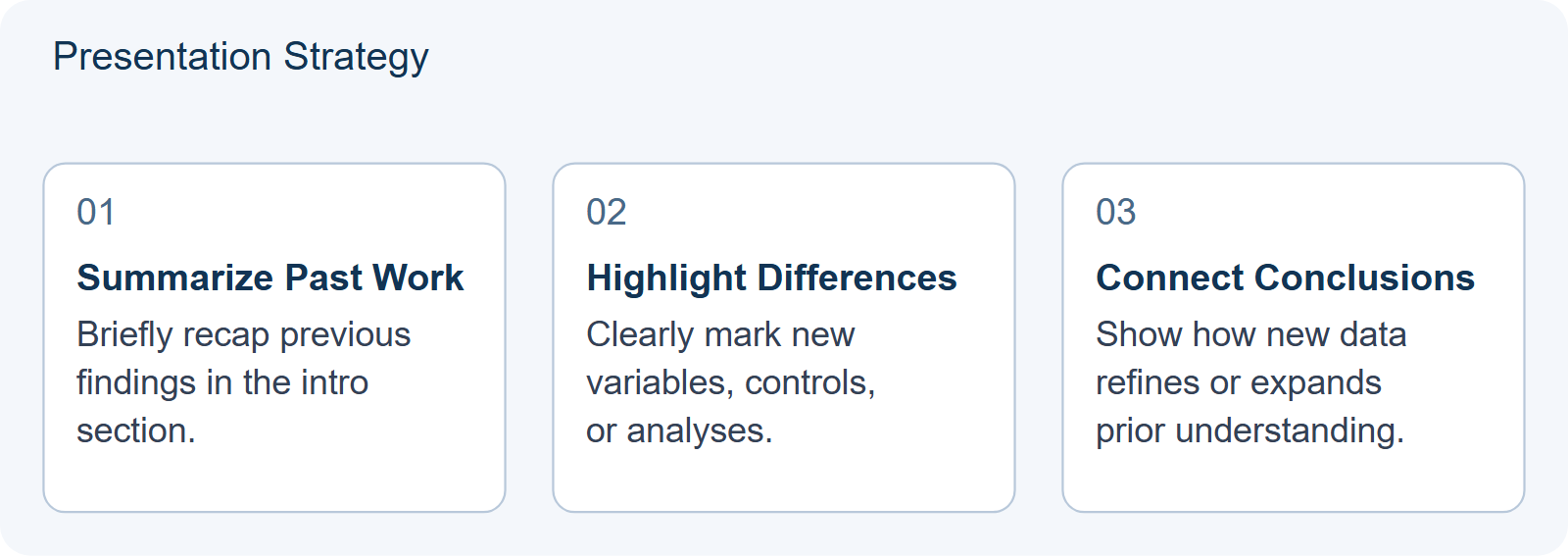
When presenting a continuation, clarity is vital. You must explicitly state what was done previously and what is new. This helps judges understand the trajectory of your research. Do not assume they remember your past abstract. Include a brief summary of prior work in your introduction, but keep the focus on the current investigation.
For detailed guidance on structuring your application materials, review our article on disclosing mentors and AI use. Proper attribution and transparency are critical for all entries, including continuations.
Common Pitfalls to Avoid
One major mistake is underestimating the workload. A continuation project requires managing both old and new data sets. Ensure you have the time to integrate these properly. Another pitfall is failing to cite your own previous work correctly. Treat your past project as a published source; acknowledge its limitations and explain how the new study addresses them.
If you are unsure about the technical requirements for your specific category, consult resources like our guide on risk assessments for engineering projects. Safety and ethical compliance remain paramount regardless of whether the project is new or continued.
Final Decision Framework
Choose a continuation only if you have a compelling reason rooted in scientific curiosity. If the primary motivation is convenience or fear of starting over, a new project will likely yield better results and a more engaging presentation. Remember, ISEF rewards innovation and rigor, not just persistence.
For insights on how your project fits into broader academic goals, see our discussion on what an ISEF result means for university applications. A well-executed continuation can demonstrate long-term commitment to a field, which is attractive to admissions officers.
Hypothetical Illustration: The Soil Microbiome Pivot
To understand how to apply the “New Science” criteria, consider a hypothetical student, Alex, who previously investigated the effect of three common fertilizers on bean plant growth. Last year’s project measured height and leaf count over four weeks using basic manual observation. Now, Alex wonders if they should simply run the same experiment for eight weeks or switch to a new topic entirely.
Alex faces two plausible choices. Choice A is a linear extension: repeat the exact same setup but double the duration and add more plants. Choice B is a methodological pivot: keep the fertilizer variable but change the measurement technique from physical growth metrics to soil microbial diversity analysis using DNA sequencing kits.
Choice A appears tempting because it leverages existing infrastructure and requires minimal learning curve. However, under the strict definition of continuation projects, this is weak. It lacks a fundamental shift in inquiry. Judges would likely view it as redundant data collection rather than scientific advancement. The hypothesis remains unchanged (“Fertilizer X increases growth”), and the methodology is identical, merely scaled up. This fails the core test of demonstrating significant new scientific inquiry.
Choice B, however, transforms the nature of the investigation. By shifting from macroscopic observations (plant height) to microscopic mechanisms (microbial community composition), Alex introduces a completely new layer of scientific rigor. The hypothesis evolves from “Which fertilizer grows taller plants?” to “How do different fertilizers alter soil microbiome stability, and does this correlate with plant health?” This satisfies the criteria for a strong continuation: the scope has expanded into a different biological domain, the methodology involves advanced techniques not used previously, and the analysis requires complex statistical modeling rather than simple averages.
The decision changes based on resource availability and intellectual curiosity. If Alex had no access to sequencing labs, Choice B might be impractical. But assuming resources exist, Choice B offers a compelling narrative arc. It shows that last year’s results raised a deeper question: Why did Fertilizer X work better? Was it direct nutrient uptake or indirect microbial support? Answering this requires new tools, justifying the continuation.
Students can use this scenario to perform a reusable self-check. Ask yourself: “If I removed all previous data, would my current experimental design still make sense as a standalone study?” In Alex’s case, studying soil microbes without prior context is valid science. Studying plant height again without new variables is not. Another check is: “Does my new analysis require skills I didn’t have last year?” If the answer is yes, you are likely making genuine progress. If the answer is no, you are repeating work.
Furthermore, consider the documentation burden. Choice B requires explaining why the metric changed. Alex must clearly articulate that the initial study identified a trend, but the follow-up seeks to explain the mechanism. This transparency turns potential confusion about changing methods into a strength, showcasing adaptive research skills. Conversely, sticking to Choice A forces Alex to defend why more time alone constitutes new science, which is a difficult argument to win.
Ultimately, the choice between extending and pivoting depends on whether the new phase answers a question generated by the old phase. If the new phase only quantifies what was already known, start fresh. If it investigates the ‘why’ behind the ‘what,’ continue. This distinction ensures that your project demonstrates depth, innovation, and rigorous scientific thinking, aligning with the expectations of high-level competition judges.
Frequently Asked Questions
Can I change my topic completely for a continuation?
No. A continuation implies building on existing work. If you change topics, it is considered a new project.
Do I need to resubmit my old abstract?
Check specific affiliate rules. Generally, you summarize prior work in the new abstract rather than attaching old documents unless required.
Is it harder to win with a continuation?
Not necessarily. Judges value depth. However, you must prove that the additional year yielded substantial new insights.